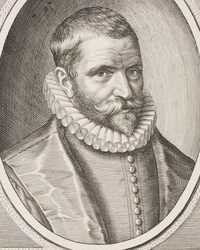
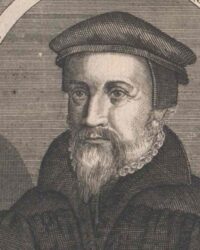
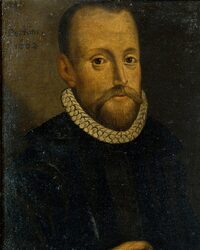
Heidelberg Catechism (1563), Zacharias Ursinus and Caspar Olevianus

Question 38

Section 15: Lord’s Day 15

Why did he suffer under Pontius Pilate, as his judge?

That he, being innocent, and yet condemned by a temporal judge,a might thereby free us from the severe judgment of God to which we were exposed.b

  1. a. Luke 23:14; John 19:4; Psalm 69:4

    Luke 23:14

    23:14 Said unto them, Ye have brought this man unto me, as one that perverteth the people: and, behold, I, having examined him before you, have found no fault in this man touching those things whereof ye accuse him:

    23:14 and said to them, "You brought me this man as one who was inciting the people to rebellion. I have examined Him here in your presence and found Him not guilty of your charges against Him.

    John 19:4

    19:4 Pilate therefore went forth again, and saith unto them, Behold, I bring him forth to you, that ye may know that I find no fault in him.

    19:4 Once again Pilate came out and said to the Jews, "Look, I am bringing Him out to you to let you know that I find no basis for a charge against Him."

    Psalm 69:4

    69:4 They that hate me without a cause are more than the hairs of mine head: they that would destroy me, being mine enemies wrongfully, are mighty: then I restored that which I took not away.

    69:4 Those who hate me without cause outnumber the hairs of my head; many are those who would destroy me-my enemies for no reason. Though I did not steal, I must repay.

    King James VersionBerean Standard Bible

  2. b. Galatians 3:13–14

    Galatians 3:13–14

    3:13 Christ hath redeemed us from the curse of the law, being made a curse for us: for it is written, Cursed is every one that hangeth on a tree: 3:14 That the blessing of Abraham might come on the Gentiles through Jesus Christ; that we might receive the promise of the Spirit through faith.

    3:13 Christ redeemed us from the curse of the law by becoming a curse for us. For it is written: "Cursed is everyone who is hung on a tree." 3:14 He redeemed us in order that the blessing promised to Abraham would come to the Gentiles in Christ Jesus, so that by faith we might receive the promise of the Spirit.

    King James VersionBerean Standard Bible
Diff style

Changes in An Orthodox Catechism (1680), Question 37

An Orthodox Catechism (1680), Question 37

Why did For what cause should he suffer under Pontius Pilate, as being his judge?Judg?

That he being innocent and yet condemned by before a temporal civil Judg might thereby free deliver us from the severe Judgment of God to which we were exposed.remained for all men.

Heidelberg Catechism (1563), Question 38

Why did he suffer under Pontius Pilate, as his judge?

That he, being innocent, and yet condemned by a temporal judge, might thereby free us from the severe judgment of God to which we were exposed.

An Orthodox Catechism (1680), Question 37

For what cause should he suffer under Pilate, as being his Judg?

That he being innocent and condemned before a civil Judg might deliver us from the severe Judgment of God which remained for all men.

Related (1)

Apostles’ Creed, which this question expounds

Clause 4

Suffered under Pontius Pilate, Was crucified, dead, and buried, He descended into hell;

Commentaries (4)

  • Zacharias Ursinus, 1587, The Summe of Christian Religion (2 parts)

    For what cause should hee suffer vnder Pilate as being his iudge? That he being innocent and condemned before a ciuil iudge might deliuer vs frō the seuere iudgement of God,…

    Zacharias Ursinus’s text
  • Jeremias Bastingius, 1591, A Catechisme of Christian Religion, with the Arguments and Use

    What reason was there, why he suffered vnder Iudge Pilate? That he an Innocent, being condemned before a ciuill Iudge, might set vs free from the straight iudgment of God, which…

    Jeremias Bastingius’s text
  • Caspar Olevianus, 1581, An Exposition of the Symbole of the Apostles (6 parts)

    On Apostles’ Creed, Clause 4, which this question expounds

    That the kingdome of Christ is offered vnto vs in the Articles of our faith; and that the faithfull are partakers of it, whilest they liue here It is certaine, that there are two…

    Caspar Olevianus’s text
  • William Perkins, 1595, An Exposition of the Symbole or Creed of the Apostles

    On Apostles’ Creed, Clause 4, which this question expounds

    Thus much of the incarnation of Christ: Now followeth the third and last point which is to be considered in the description of Christ, namely the estate of Christ after his birth,…

    William Perkins’s text