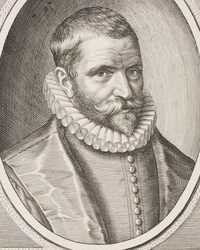
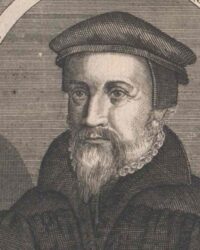
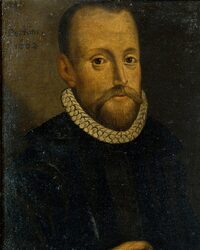
Heidelberg Catechism (1563), Zacharias Ursinus and Caspar Olevianus

Question 30

Section 11: Lord’s Day 11

Do such then believe in Jesus the only Saviour, who seek their salvation and happiness of saints, of themselves, or anywhere else?

They do not; for though they boast of him in words, yet in deeds they deny Jesus the only deliverer and Saviour;a for one of these two things must be true, that either Jesus is not a complete Saviour; or that they, who by a true faith receive this Saviour, must find all things in him necessary to their salvation.b

  1. a. 1 Corinthians 1:13, 31; Galatians 5:4

    1 Corinthians 1:13; 1 Corinthians 1:31

    1:13 Is Christ divided? was Paul crucified for you? or were ye baptized in the name of Paul? 1:31 That, according as it is written, He that glorieth, let him glory in the Lord.

    1:13 Is Christ divided? Was Paul crucified for you? Were you baptized into the name of Paul? 1:31 Therefore, as it is written: "Let him who boasts boast in the Lord."

    Galatians 5:4

    5:4 Christ is become of no effect unto you, whosoever of you are justified by the law; ye are fallen from grace.

    5:4 You who are trying to be justified by the law have been severed from Christ; you have fallen away from grace.

    King James VersionBerean Standard Bible

  2. b. Colossians 2:20; Isaiah 9:6–7; Colossians 1:19–20

    Colossians 2:20

    2:20 Wherefore if ye be dead with Christ from the rudiments of the world, why, as though living in the world, are ye subject to ordinances,

    2:20 If you have died with Christ to the spiritual forces of the world, why, as though you still belonged to the world, do you submit to its regulations:

    Isaiah 9:6–7

    9:6 For unto us a child is born, unto us a son is given: and the government shall be upon his shoulder: and his name shall be called Wonderful, Counsellor, The mighty God, The everlasting Father, The Prince of Peace. 9:7 Of the increase of his government and peace there shall be no end, upon the throne of David, and upon his kingdom, to order it, and to establish it with judgment and with justice from henceforth even for ever. The zeal of the Lord of hosts will perform this.

    9:6 For unto us a child is born, unto us a son is given, and the government will be upon His shoulders. And He will be called Wonderful Counselor, Mighty God, Everlasting Father, Prince of Peace. 9:7 Of the increase of His government and peace there will be no end. He will reign on the throne of David and over his kingdom, to establish and sustain it with justice and righteousness from that time and forevermore. The zeal of the LORD of Hosts will accomplish this.

    Colossians 1:19–20

    1:19 For it pleased the Father that in him should all fulness dwell; 1:20 And, having made peace through the blood of his cross, by him to reconcile all things unto himself; by him, I say, whether they be things in earth, or things in heaven.

    1:19 For God was pleased to have all His fullness dwell in Him, 1:20 and through Him to reconcile to Himself all things, whether things on earth or things in heaven, by making peace through the blood of His cross.

    King James VersionBerean Standard Bible
Diff style

Changes in An Orthodox Catechism (1680), Question 29

An Orthodox Catechism (1680), Question 29

Do such they then believe in Jesus the only Saviour Jesus, who seek their salvation for happiness and happiness safety of the Saints, or of themselves, or anywhere else where?

They do not; No: for though although in word they boast themselves of him in words, as their only Saviour, yet in deeds indeed they deny Jesus the only deliverer and Saviour Jesus: for one of these two things it must needs be true, that either Jesus is not a complete perfect Saviour, or that they, those who by imbrace him as their Saviour with a true faith, receive this Saviour, must find possess all things in him necessary to their which are required unto Salvation.

Heidelberg Catechism (1563), Question 30

Do such then believe in Jesus the only Saviour, who seek their salvation and happiness of saints, of themselves, or anywhere else?

They do not; for though they boast of him in words, yet in deeds they deny Jesus the only deliverer and Saviour; for one of these two things must be true, that either Jesus is not a complete Saviour; or that they, who by a true faith receive this Saviour, must find all things in him necessary to their salvation.

An Orthodox Catechism (1680), Question 29

Do they then believe in the only Saviour Jesus, who seek for happiness and safety of the Saints, or of themselves, or else where?

No: for although in word they boast themselves of him as their only Saviour, yet indeed they deny the only Saviour Jesus: for it must needs be that either Jesus is not a perfect Saviour, or that those who imbrace him as their Saviour with a true faith, possess all things in him which are required unto Salvation.

Related (1)

Apostles’ Creed, which this question expounds

Clause 2

And in Jesus Christ his only Son our Lord,

Commentaries (4)

  • Zacharias Ursinus, 1587, The Summe of Christian Religion (2 parts)

    Doe they then beleeue in the only Sauiour Jesus, who seeke for happinesse and safety of the Saintes, or of themselues, or elsewhere? No. For although in worde they boast…

    Zacharias Ursinus’s text
  • Jeremias Bastingius, 1591, A Catechisme of Christian Religion, with the Arguments and Use

    Do they that beleeue in the only Sauiour Iesus, who seeke for happines from Saints, or from themselues, or from any thing els? No: for although in word, they glorie in him as a…

    Jeremias Bastingius’s text
  • Caspar Olevianus, 1581, An Exposition of the Symbole of the Apostles (6 parts)

    On Apostles’ Creed, Clause 2, which this question expounds

    That the kingdome of Christ is offered vnto vs in the Articles of our faith; and that the faithfull are partakers of it, whilest they liue here It is certaine, that there are two…

    Caspar Olevianus’s text
  • William Perkins, 1595, An Exposition of the Symbole or Creed of the Apostles

    On Apostles’ Creed, Clause 2, which this question expounds

    Thus much of the permission of the fall of man: Nowe we come to the Couenant of grace. Which is nothing else but a compact made betweene God and man touching reconciliation and…

    William Perkins’s text